
HELLO! I’M MANAJIT DAS
Welcome to My Site
ABOUT ME
I’m a computational chemist with a Ph.D. from the Indian Institute of Technology Bombay, where I was awarded the Prime Minister’s Research Fellowship. I specialize in developing machine-learning approaches for reaction-mechanism analysis and molecular-property prediction.
EDUCATIONAL BACKGROUND
BACHELOR OF SCIENCE
2014 - 2017
I completed my B.Sc. in Chemistry with honors from A. B. N. Seal, North Bengal University.
MASTER OF SCIENCE
2017 - 2019
I completed my M.Sc. in Chemistry from the Indian Institute of Technology, Hyderabad.
DOCTORATE OF PHILOSOPHY
July 2019- Feb 2026
I completed my Ph.D. in Computational Chemistry under Prof. Raghavan B. Sunoj at the Indian Institute of Technology Bombay.
RESEARCH
Machine Learning in Chemistry
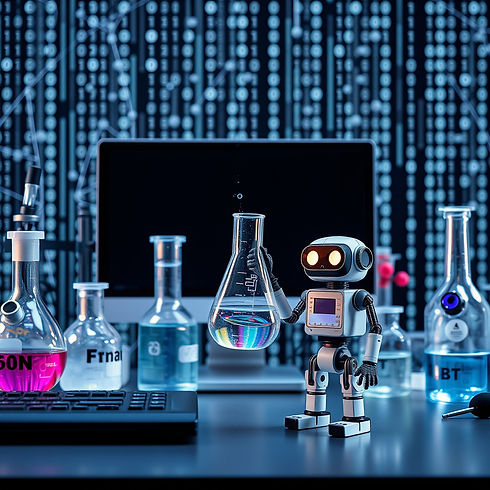
The application of computational chemistry is of immense importance to investigate the peculiarities observed in homogenous catalysis and can rationalize the origin of selectivity in asymmetric catalysis. In this regard, recently machine learning has appeared as a new promising tool to solve such chemical problem but with lower cost and greater efficiency. Thus, it has interested me to harness its power for the prediction of output relevant to homogenous catalysis. The wealth of knowledge obtained from the reactions carried out can be exploited to build machine learning model which in turn can predict the output of a new reaction before an experimentalist performs it physically. It can mitigate the labors, time and material required for experimentation and, thus can lead us to a sustainable world. Not only the reaction output predictive model, but also a class of machine learning model known as generative model can design new molecules. Though it is in earlier stages applied to drug discovery, I am interested to employ its utility in designing new catalysts.
PUBLICATIONS
Work History
1) Jana, S.; Panigrahi, G.; Narayanswamy, S.; Ishtiyak, M.; Das, M.; Bhattacharjee, P. P.; Ranjan, K. M.; Prakash, J. Synthesis, crystal structure, optical absorption study, and electronic structure of Cs3FeCl5 Solid State Sciences 2020, 100, 106064
2) Das, M.; Gogoi, A.; Sunoj, R. B. Molecular Insights on Solvent Effects in Organic Reactions as Obtained through Computational Chemistry Tools. J. Org. Chem. 2021, (Accepted)
3) Das, M.; Sharma, P. Sunoj, R. B. Machine Learning Assisted enantioselectivity Prediction of Asymmetric Relay Heck Reaction. Manuscript under preparation.
4) Das, M.; Hoque, A.; Baranwal, M.; Sunoj, R. B. DeepMech: A Machine Learning Framework for Chemical Reaction Mechanism Prediction. arXiv, 2025, link: https://arxiv.org/abs/2509.15872
TEACHING
I have actively participated in the following courses as a teaching assistant (TA) in the institute
1) CH 105, Organic and Inorganic Chemistry, Autumn 2020
2)CH 504, Computational Chemistry, Spring 2021
3)CH 792, Communication Skills-II, Autumn 2020
Further I am enjoying teaching in the following college as per the PMRF requirement.
1) St. Dominic's College, Kanjirappally
CH500202, Organic Reaction Mechanism
COURSES STUDIED
Here is a list of courses I have studied in my first year of Ph.D.
1) CH 546, Introduction to Biomolecules
2) CH 792, Communication Skill-II
3) CH 801, Symmetry in Chemistry
4) CH 821, Topics in Chemistry-I
5) CH 831, Advanced Laboratory Techniques
6) CH 791, Communication Skill-I
7) CH 504, Computational Chemistry
8) CHS 802, Seminar
INTEREST
Well, this may be the least important section in the website but let's share some of my interest.
I started learning Japanese language after joining IITB and now I can understand some common phrases and words.
I enjoy reading Bengali literature, unfortunately I remember things very little !!
also, I like roaming around the IITB campus, observe the little birds always chirping
Lastly, I am and will be always a learner, now learning to how to build your own web page, coding, html and I really enjoy it.
Though I am not so active in social media, but we can get in touch in any of the following platforms 1. GitHub, 2. Twitter